

Screen Time parental-control app review
Our Verdict
Screen Time is great at managing kids' smartphone time, but some other parental-control features price extra.
For
- Intuitive blueprint
- Job reward system
Against
- Upcharges for location tracking, web filtering
- No text or call monitoring
- Express functionality on iOS
Tom's Guide Verdict
Screen Time is great at managing kids' smartphone fourth dimension, but some other parental-command features toll extra.
Pros
- +
Intuitive design
- +
Task advantage arrangement
Cons
- -
Upcharges for location tracking, web filtering
- -
No text or phone call monitoring
- -
Express functionality on iOS
Screen Time is a freemium entry amongst the best parental control apps. The app is available on Android and iOS, with monitoring features available for free and truthful parental controls unlocked via subscription.
This isn't to be confused with the native iOS feature likewise known as "Screen Time," introduced with iOS 12, that offers some parental controls and time-usage statistics.
As with many of the apps that I tested, the characteristic attack iOS is greatly reduced compared with its Android counterpart. But while virtually apps have diminished details or controls on iOS, Screen Time drops certain features entirely for iOS, including app management and spider web filtering.
Every bit its proper name suggests, Screen Time is predominantly focused on managing the time spent on devices. Information technology does an excellent job of that, only the remainder of the feature prepare (particularly on iOS) falls curt of the superlative options in the market and makes Screen Time a tough sell at its price.
Norton Premier Family does more on Android devices; Net Nanny is the best choice for parents of kids with iOS devices.
Read on for the rest of our Screen Time review.
Updated with pricing changes. This review was originally published Feb. 14, 2019.
Screen Time: Costs and what's covered
Screen Time uses the common freemium business model. The app is free to download and use on Android or iOS, with a bones feature set.
You lot can pay a $half-dozen.99 monthly subscription fee to unlock Premium features for an unlimited number of users and devices. In that location are disbelieve if you pay for six months or a year at one time, and new free users get a seven-day costless trial (no payment info required) of all the premium features.
There used to be a $four.99 monthly plan that didn't include geolocation and spider web filtering, but as those are pretty important features that most parents would want, that service tier has been discontinued.
Screen Time's costless solution is a good-looking app, but information technology offers only monitoring of the child'southward device, not any control, and is limited to a single device per kid. The Android app is slightly more thorough than the iOS i, as monitoring with search and web history is included, but yous still cannot restrict access based on time or content.
Parents adamant to use a free choice should instead consider the complimentary tier of Kaspersky Condom Kids. While it falls well short of any paid option, information technology is the almost feature-rich gratuitous parental-control app you'll find.
Screen Fourth dimension'due south Premium plan unlocks the bodily parental controls and brings with it the power to prepare daily limits for device usage, daily schedules for device usage, the task organisation for earning additional fourth dimension, and the power to pause and unpause device usage with a single push button.
On Android, there are a few features the iOS version doesn't take, such every bit an app blocker and the power to see a kid'south web history and search history.
Screen Time: Installation
We tested Screen Time on a Google Pixel 2XL running Android nine.0 (Pie), an iPhone 7 Plus and an iPad Air 2. Spider web-portal access was done using a 15-inch 2017 Macbook Pro running MacOS ten.13.half dozen.
The installation of Screen Fourth dimension was straightforward on both Android and iOS. In both cases, I found it easier to but install the apps directly on both the parent and the child devices rather than by kickoff using the web browser on the child device(s) every bit instructed.
I ran into occasional error letters when using the browser for this purpose on both platforms. But the apps allowed me to click through the installation instructions and have the controls operational on the child device in two or iii minutes.
Yous will need to create a kid profile either via the web portal or on the parent device. Of the 8 apps I tested, Screen Time had the near basic profile-creation process afterward MMGuardian, asking me but for the kid's proper name.
You tin can later add together a child's date of birth, which will alter settings in the app, so I'yard unclear on why this wasn't simply part of the initial contour creation. Each child besides has a unique pairing code that appears in his or her profile, which is and then used to link devices to their accounts.
On a child's iOS device, the Screen Time app uses the standard process of installing a Mobile Device Direction contour via a download using the device'due south Safari browser along with granting a few permissions. One time installed, the app also runs a VPN, which is also common among parental-control apps that aim to control the flow of data to the device.
The Android child-app setup follows a similar process. You need to grant the app Device Administrator status, Usage admission and Accessibility services. One time it'southward installed on Android, a persistent notification appears indicating that Screen Time is agile.
Screen Time: App management
The app-management feature is express to Android devices and doesn't appear on iOS. To some degree, this is a result of Apple's restrictions, merely other parental-command apps, such equally Zift, make an try to offer some app direction on iOS. The gilded standard for app management on iOS is OurPact.
On Android, the Apps section is grouped together with the fourth dimension-management features, which we will encompass in detail afterwards. The App blocker is a full list of the apps on the kid's device, with a checkbox side by side to each app that volition allow you to cake (or unblock) it.
There is a toggle to select or unselect all apps, if you desire to start with a clean slate. Another toggle lets yous choose whether new apps are automatically added to your existing restrictions.
You tin as well see any schedules that have been practical to a specific app. While bedtime or school-time schedules are likely to be applied to all apps, you lot accept the option of freeing up certain apps for, say, "homework time" when it's conceivable that your child may need to access to the internet or a figurer.
It would exist nice if this characteristic could group apps by category to make it a little more manageable, particularly for older children who may have a big number of apps. But ultimately, I found that it worked reliably, and once the initial settings were in identify, it was simple enough to manage.
Screen Time: Filtering
This is another Android-only feature, and as mentioned earlier, you'll need to pay at least an actress $9.99 per yr to unlock it, although it's besides part of the 14-24-hour interval complimentary trial. In one case enabled, the web filtering lets you block content beyond 25 distinct categories (eastward.1000., Alcohol and Drugs, Gambling or Mature Content).
You can also opt to block or allow specific websites past entering them manually or by reviewing your child'southward web history. Screen Fourth dimension web filtering will work with any of the most widely used Android browsers.
Screen Time: Time management
This is the center of Screen Fourth dimension. The app does really smoothen here, with a clean and intuitive user interface that I found easier to manage than whatever of the other parental-control apps I tested.
The just difference betwixt the fourth dimension-direction features on Android and on iOS is that on Android, a section labeled "App restrictions" volition let you exclude specific apps from that daily limit or schedule.
On Android, you can completely block the child'south device to the betoken that nothing is usable, which is potentially problematic. You may want to leave the Telephone app bachelor, for example. Another option would be to apply the new "Emergency calls" feature that lets parents grant admission from their ain app dashboard.
On iOS, at that place is no private app blocking. When fourth dimension is upwards or a scheduled block time is reached, all apps other than the default iOS apps volition be hidden.
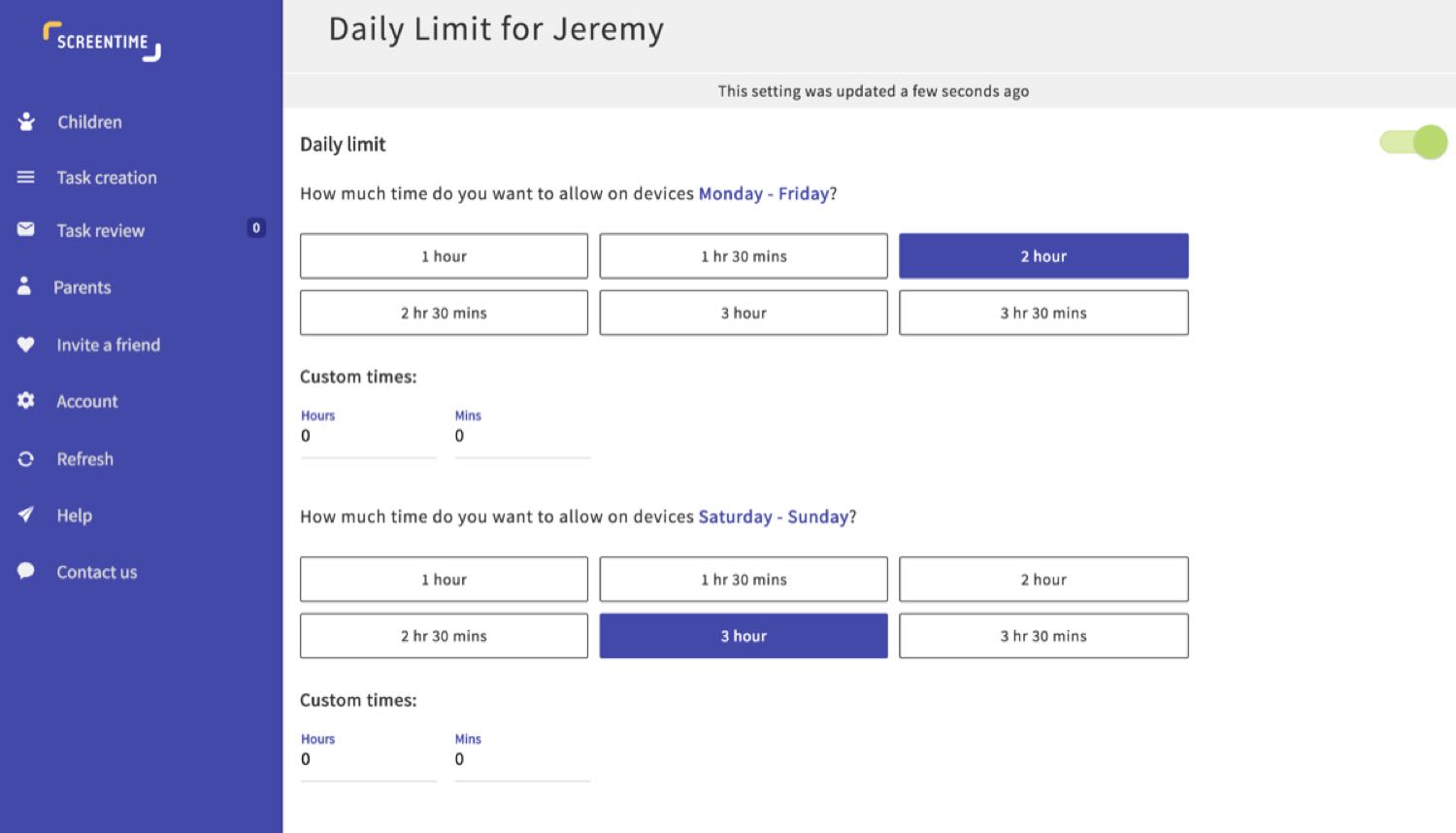
You can set a daily usage limit for each child, with 1 setting for Monday through Friday and another for Sat and Dominicus. You have 6 quick-setting fourth dimension-interval choices here, ranging from 1 hour to three hours and thirty minutes, but you are gratis to enter whatever custom time you prefer.
Schedules are the next component. You lot can carve out specific windows of time in which you want your child's device blocked. There are iv default schedules offered, none of which are activated by default: "School AM," "School PM," "Outdoor fourth dimension" and "Homework."
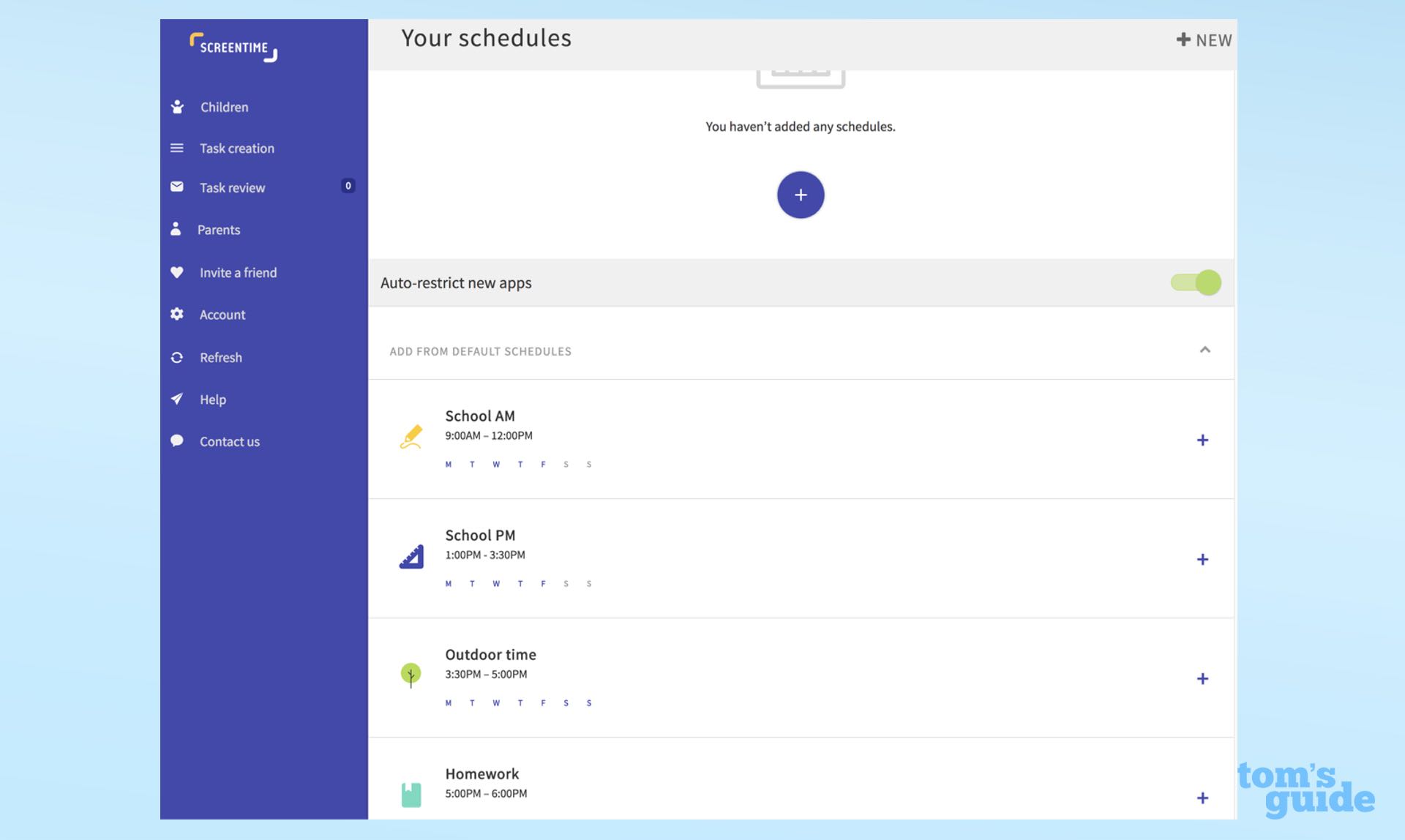
While you probably won't use all of these schedules, and will no dubiousness desire to adjust them if you do, they provide a nice jumping-off point.
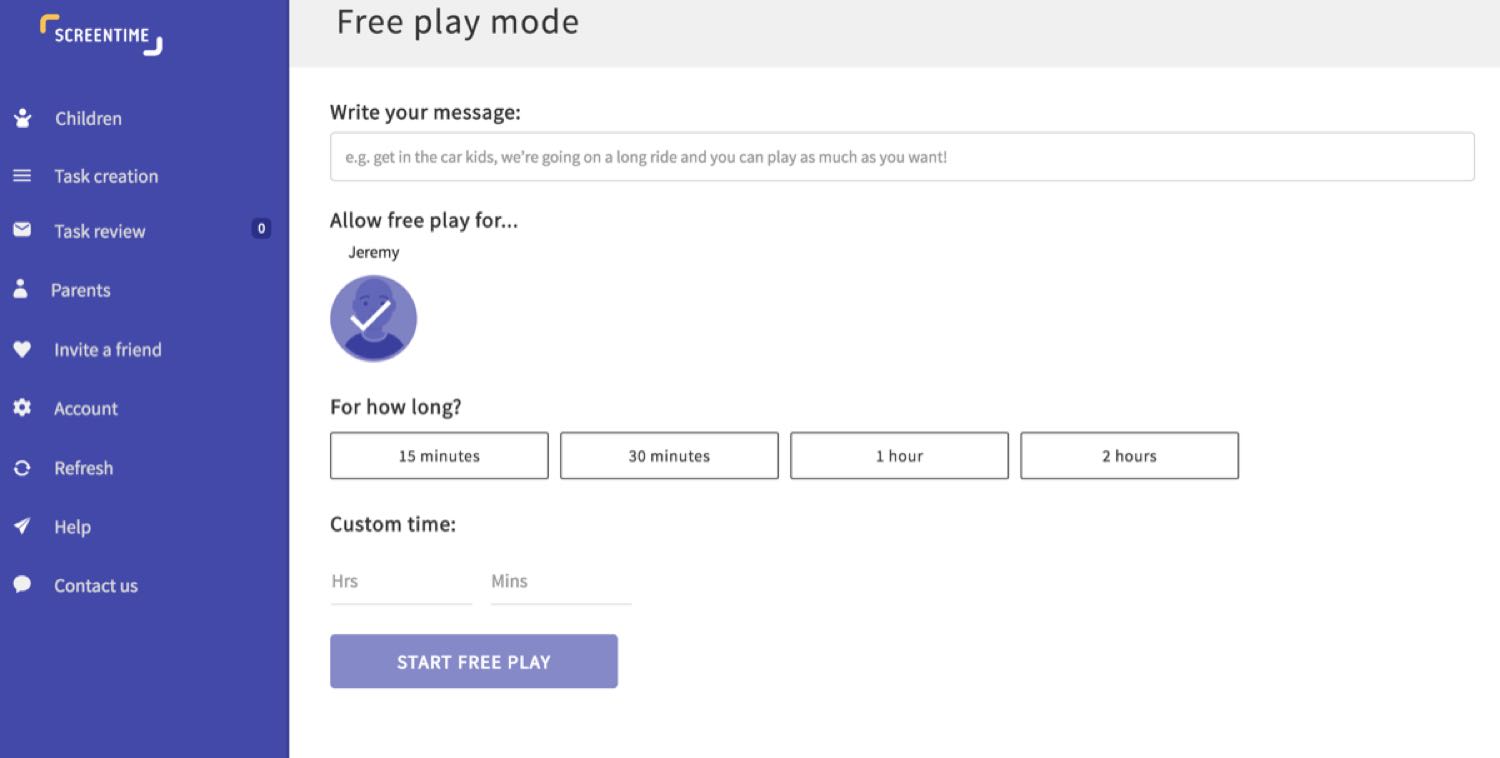
Gratis Play Way allows you to grant your children actress device time without interfering with your established schedules or with bonus time that was awarded for completed Tasks. (More than on Tasks below.)
Y'all simply tap the "Free play manner" button at the lesser of the parent app, and so you lot can cull which children to utilise it to and how long they have. Yous can fifty-fifty provide a quick custom message that will show up on their devices to let them know they have free time.
There's nothing magical nigh the Screen Time interface. I appreciated the simple text-entry starting time-and-terminate times with toggles for each day. Many of the other parental-command apps use a filigree of boxes to schedule time, which may look good only I found irritating in practice.
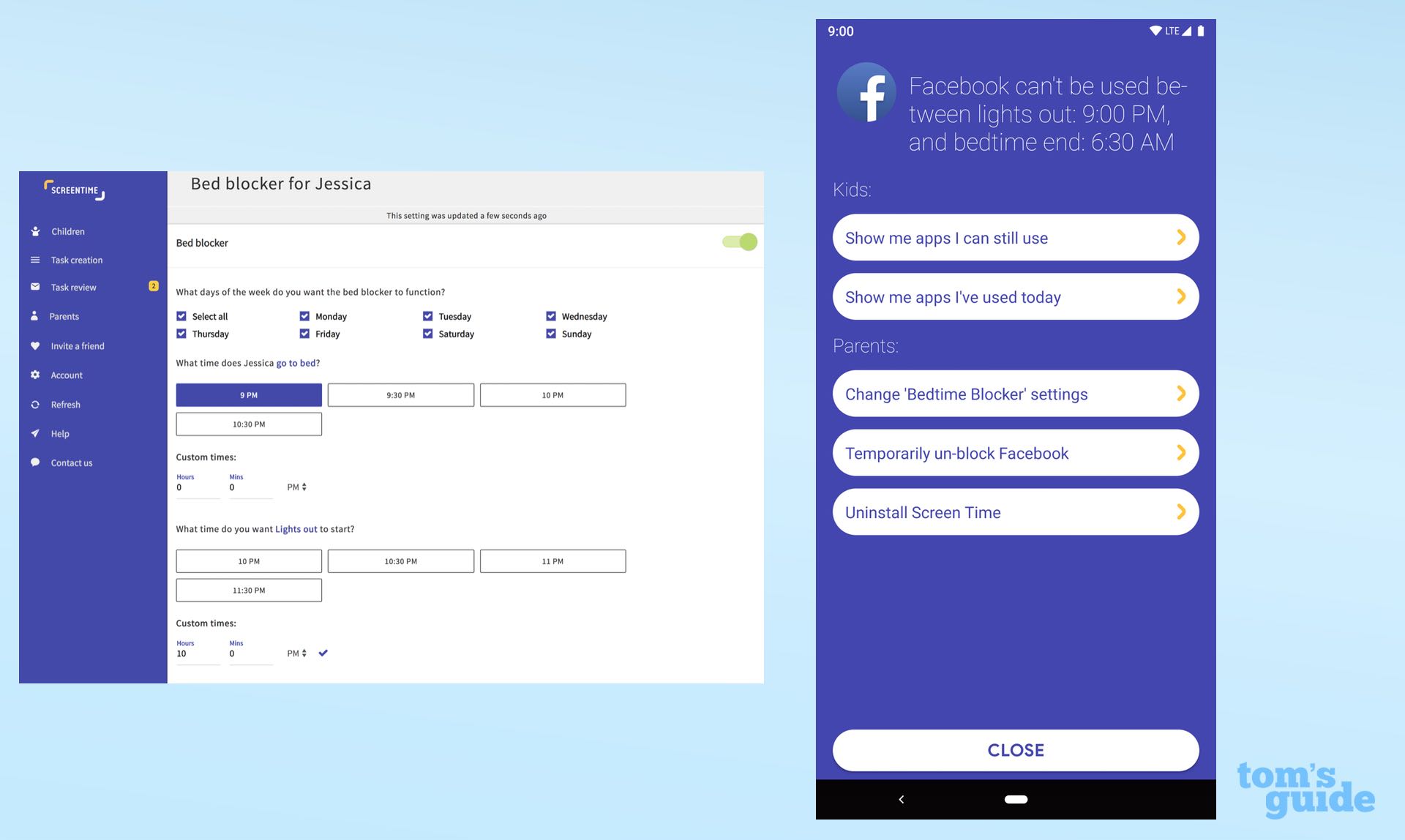
The final section in time direction is "Bed Blocker." This characteristic could also have been handled with custom schedules, but it's a logical and appreciated singled-out section.
On Android, there are three settings: a fourth dimension for the child to go to bed, a fourth dimension for lights-out so finally the wake-up time. The idea there is that yous can get out reading, music or audiobooks bachelor until bedtime.
MORE: The One Google App Every Parent Needs
On iOS, there are simply go-to-bed and wake-up times, as again there is no power to granularly restrict apps.
Screen Time: Texting management
In that location are no texting or call-related features available in Screen Fourth dimension. If this is a primary business organisation for you lot, then Norton Family unit Premier and Qustodio are both strong options.
Screen Time: Location tracking
Location tracking was added to Screen Time in August 2018. It initially required an additional subscription on tiptop of the Premium fees, but now has been rolled into the Premium plan along with an accompanying cost hike. It offers the current or concluding known location for a kid's device, depending on whether information technology has a connectedness.
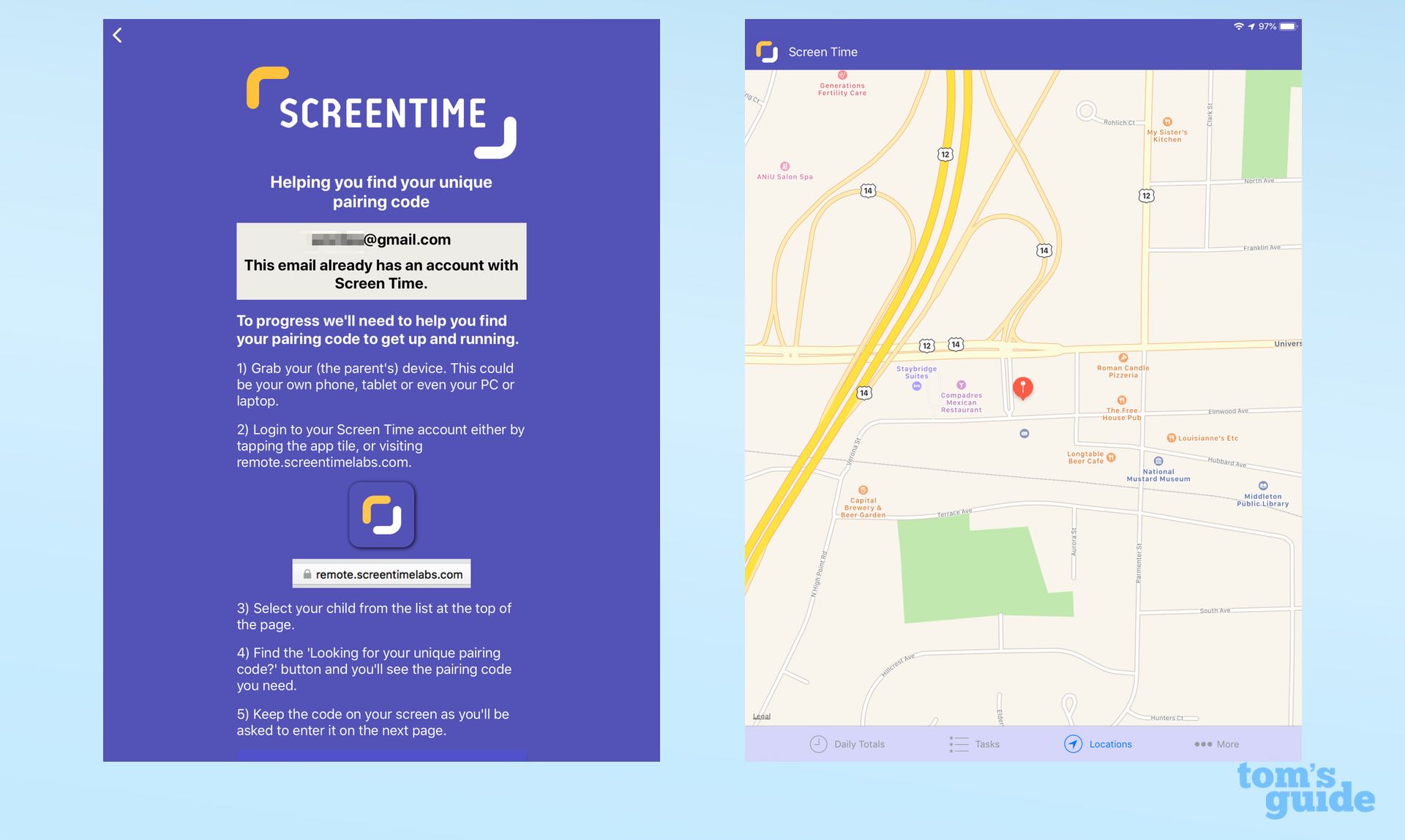
The existing functionality works as expected, and location history and geofencing were added in July 2019, subsequently this review was first published and calculation a bit more justification for the upcharge.
Screen Time: Break/Unpause
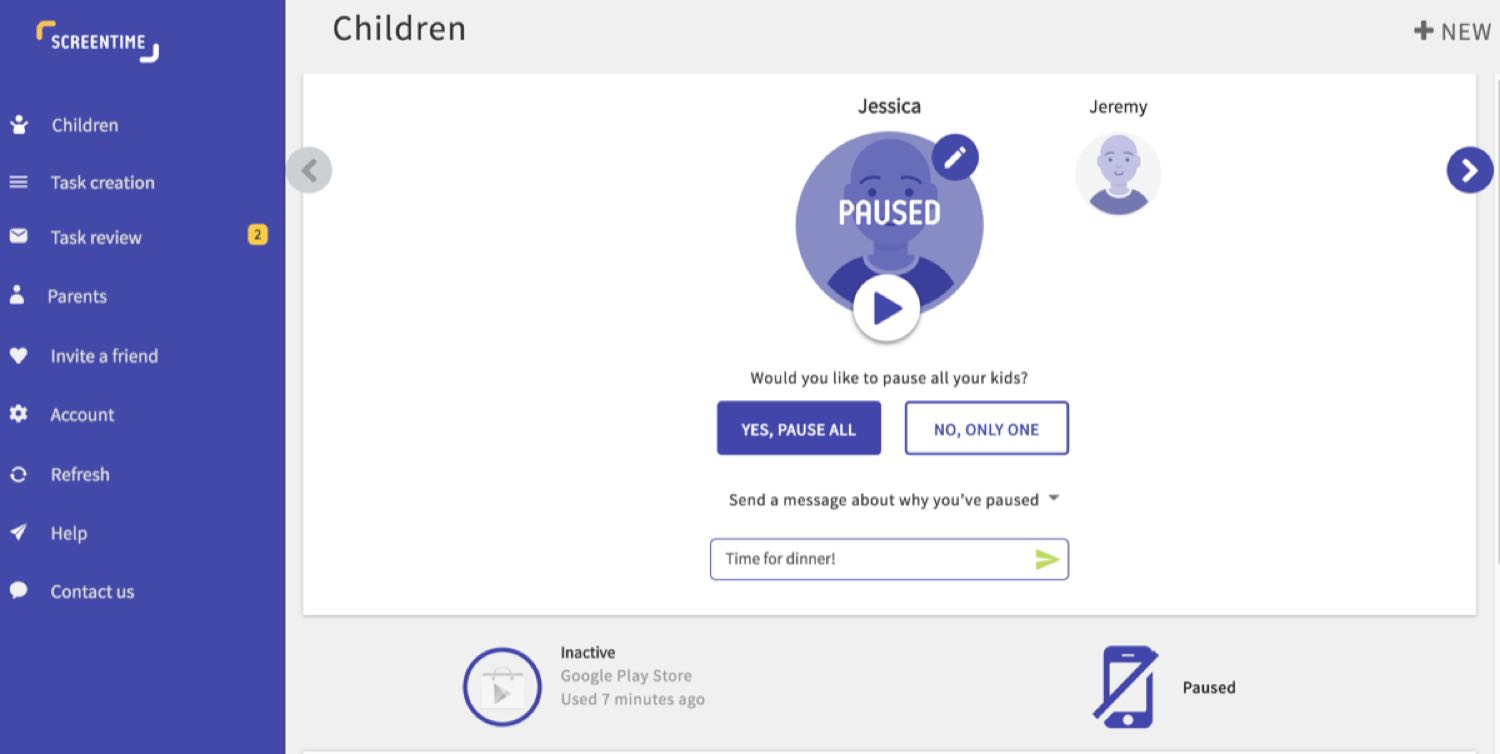
If you lot need to close off one or all of the devices on your account immediately, that can exist done in Screen Fourth dimension with the break push button on whatsoever kid'due south contour. Pausing a device will block all not-native apps on iOS, and all apps on Android.
When y'all click on the interruption symbol on a child's contour, information technology automatically pauses his or her device. The Screen Fourth dimension web portal will and then ask whether you would similar to interruption all your kids' devices or the devices of just one of your kids. It and too gives y'all the option to add a message to the break so the child knows what'southward happening.
Screen Time: Tasks
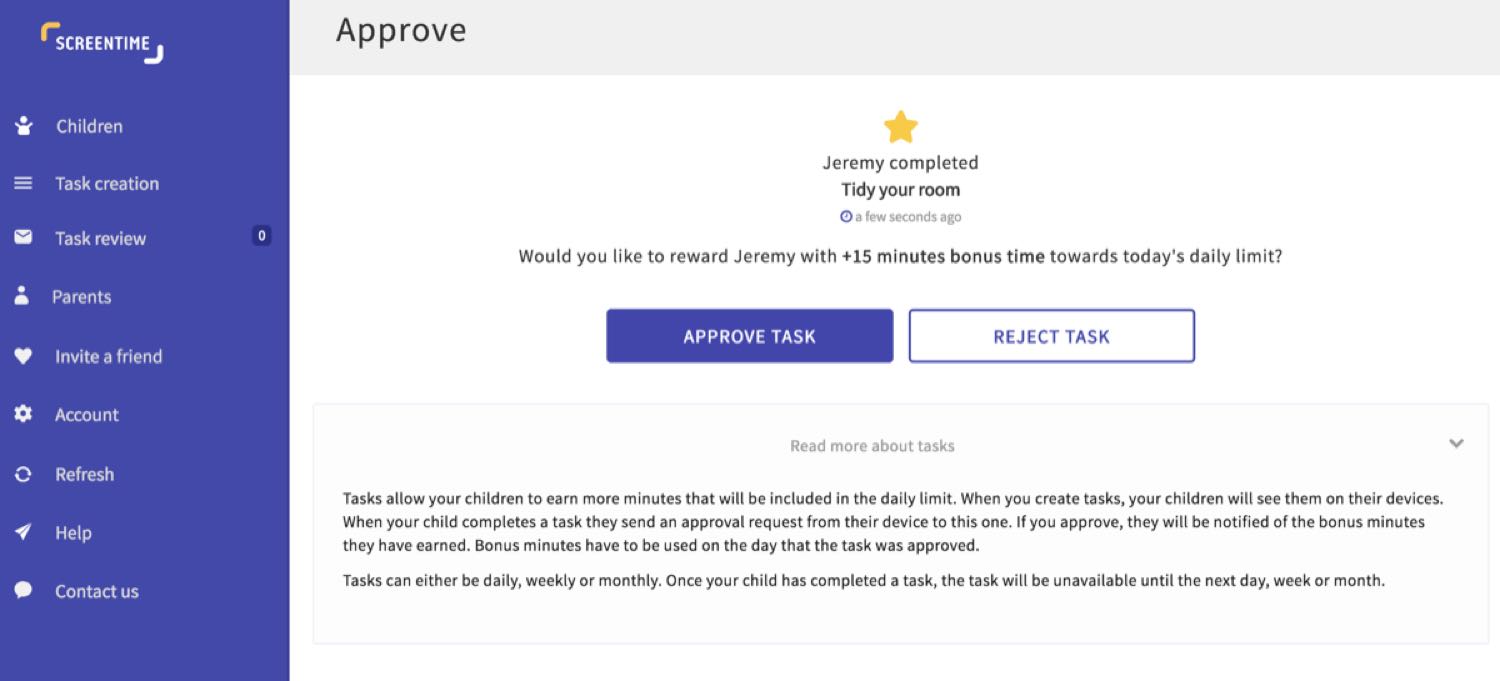
This is one of my favorite piddling touches in Screen Time, and I'm surprised no other parental-control app has adopted information technology. You can create tasks in the parental portal and assign each one a "infinitesimal value" so that your child can earn additional device time.
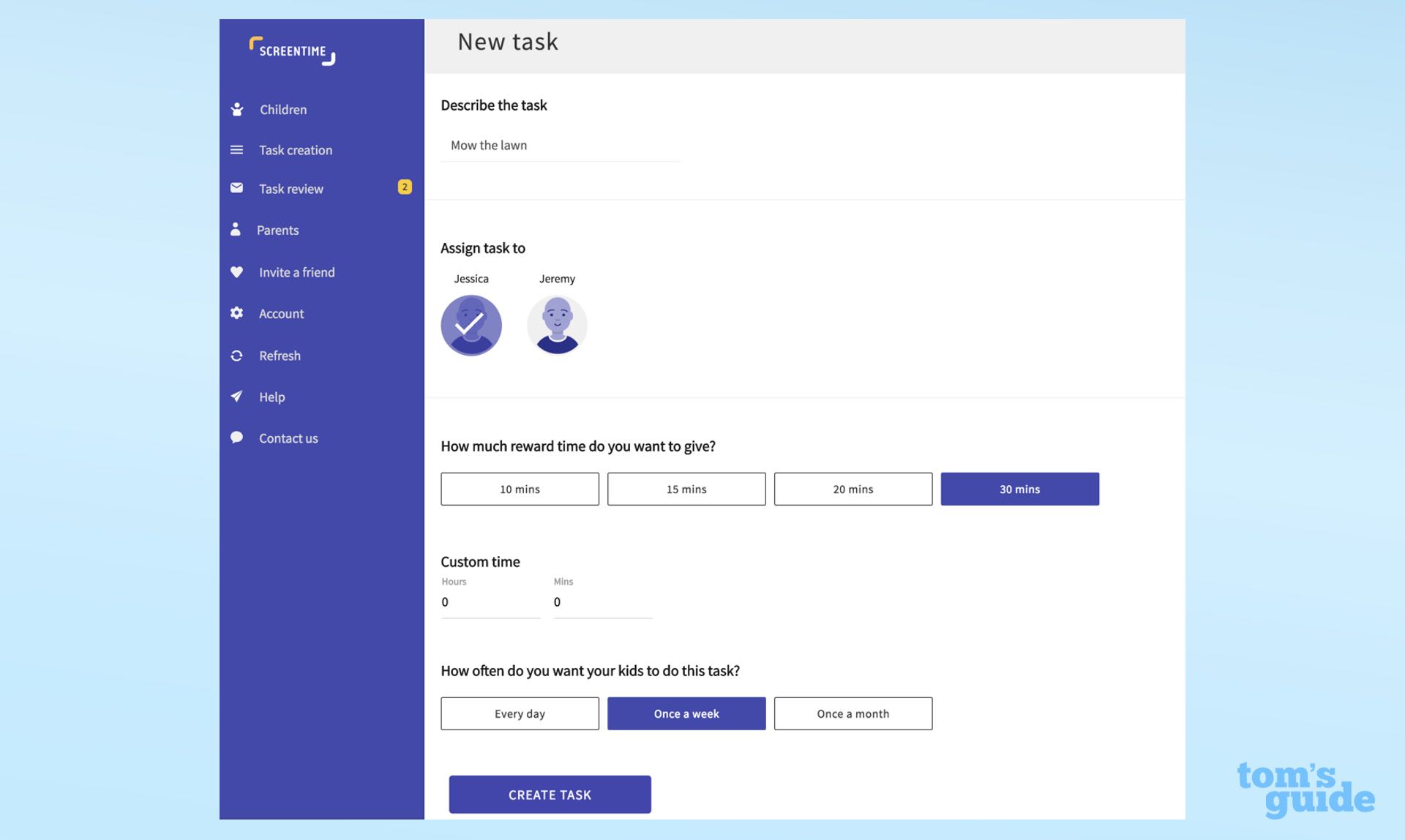
The app gives you a few case tasks to go started, similar "Do something kind," "Finish your homework" and "Tidy your room," but you can create as many tasks as you lot want. You can assign tasks to a specific child or make them available to any or all of the kids. Yous only give the chore a proper noun, a time value and the frequency (daily/weekly/monthly) in which it can be earned.
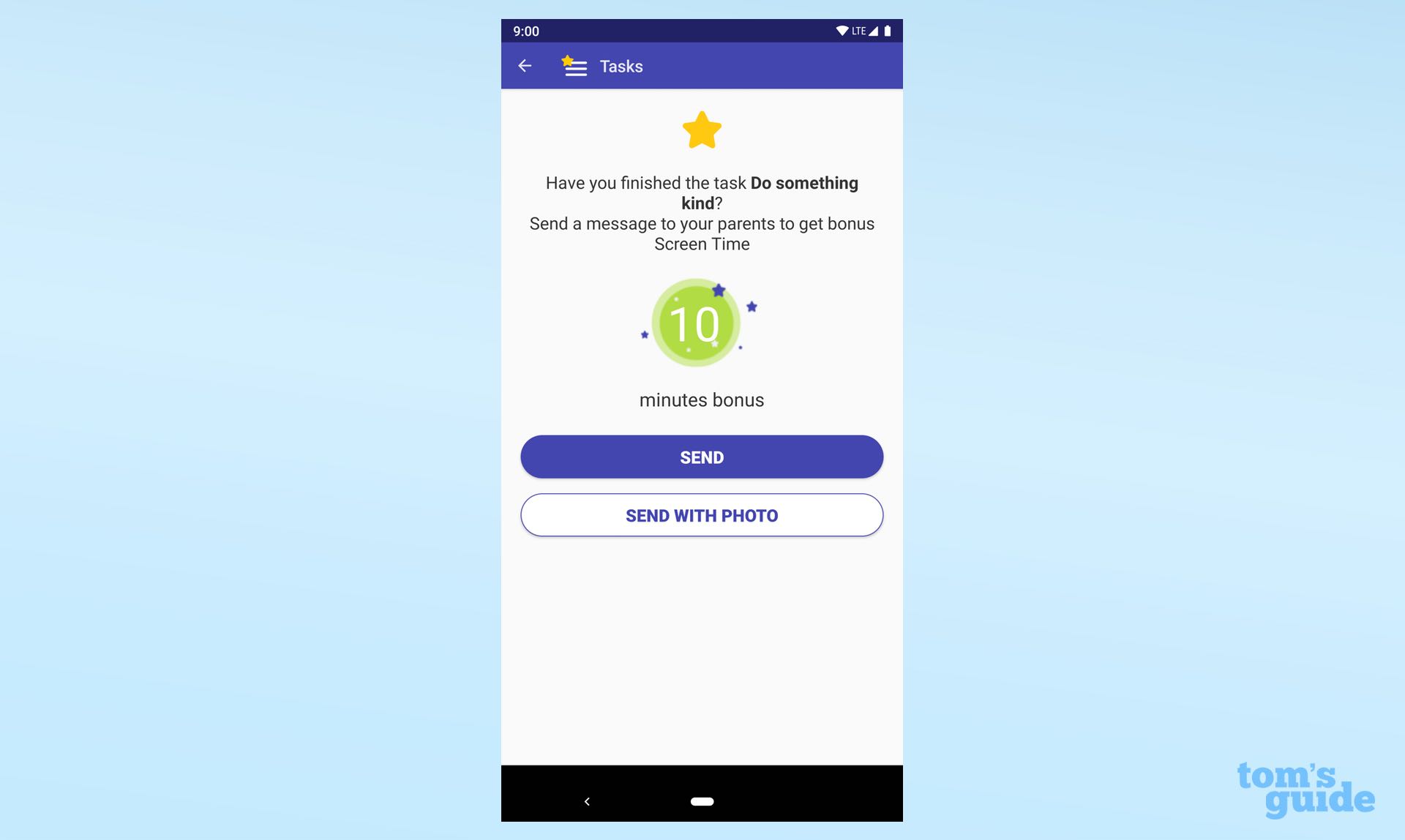
Once the child completes the task, he or she taps that they have washed information technology in the Screen Time app on their device. They can even send you lot a photo as verification that the chore is complete. You can so verify that the task was completed and grant the child the additional fourth dimension.
Screen Time: Action logs
This is again predominantly relevant for Android users. On iOS, the simply activity that you lot are really able to run into is the overall time that a device was used -— useful, but not terribly informative well-nigh how a kid is using a device.
Android allows for much more thorough usage information. Parents can view the last 50 apps used along with the duration of time each was used. Viewing daily usage totals, y'all tin drill down to all of the apps used throughout the day, and then click down to view the private usage sessions.
Web history and search history predictably offer a list of the most recent websites visited and searches performed. Newer versions of Android, (Marshmallow and afterward, according to Screen Fourth dimension'south FAQs, and my testing) practise non back up the search-history functionality, but searches will still appear in the web history, so this information isn't totally lost.
Screen Time review: Bottom line
I really liked a number of features well-nigh Screen Fourth dimension, including the overall design, the user interface of the web portal and the task system.
Merely the dramatically reduced characteristic attack iOS compared with Android brand Screen Time difficult to recommend. Options like OurPact (now for Android only) and Internet Nanny offer similarly compelling design with greater functionality at a comparable price.
Credit: Tom's Guide

Source: https://www.tomsguide.com/us/screen-time-app,review-6134.html
Posted by: taylorbeated1958.blogspot.com
0 Response to "Screen Time parental-control app review"
Post a Comment